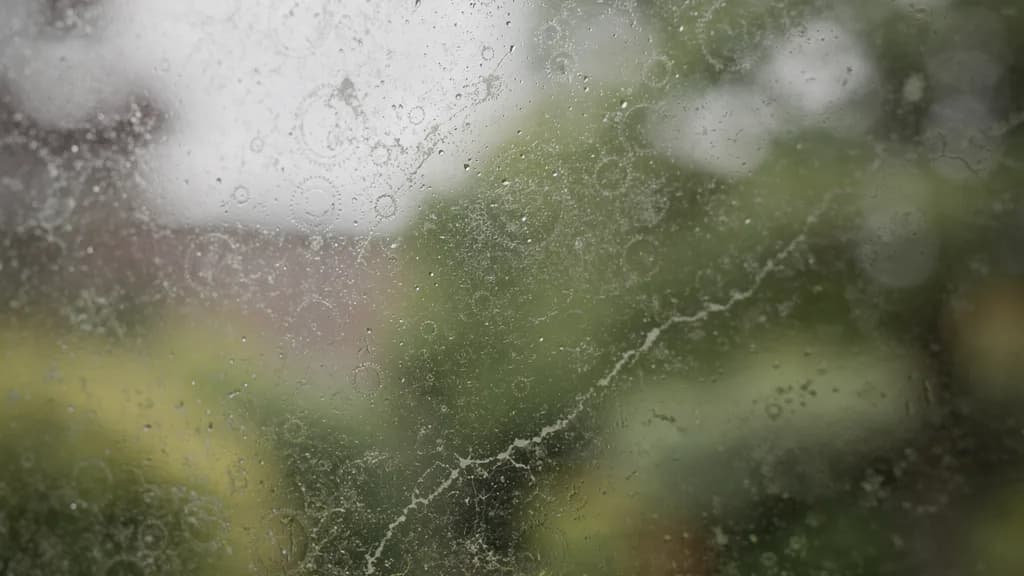
Glass gets cleaned. Two weeks later, after a few wet days, it looks like nothing happened. That complaint comes up more here than almost anywhere, and it is usually not a cleaning that failed. It is what our rain carries, where the water has been before it reaches your glass, and a handful of things around the window that keep putting the dirt back.
Rain is not rinse water
There is a comfortable idea that rain washes windows. It does close to the opposite, for a simple reason: by the time the water reaches your glass, it has already been somewhere.
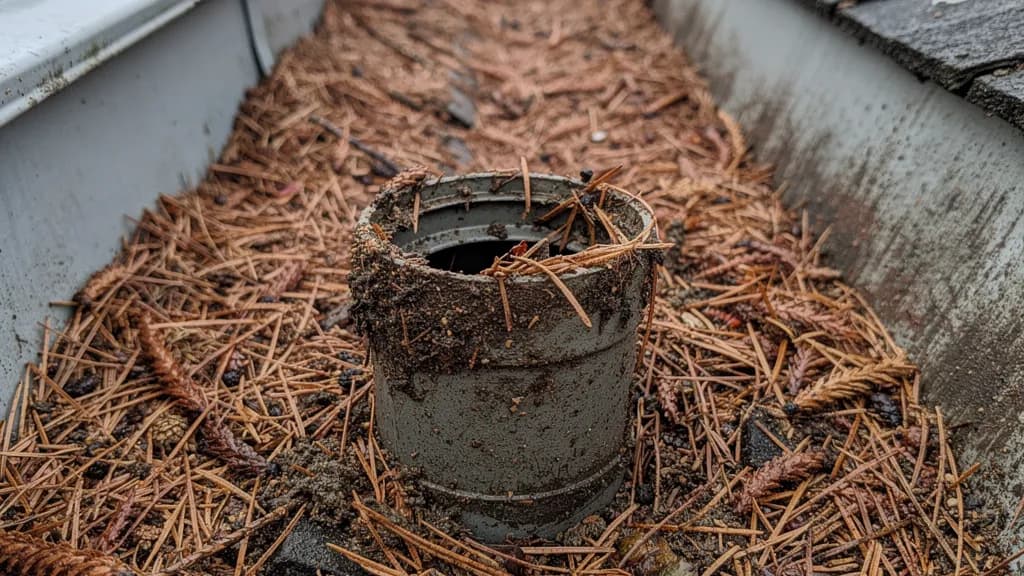
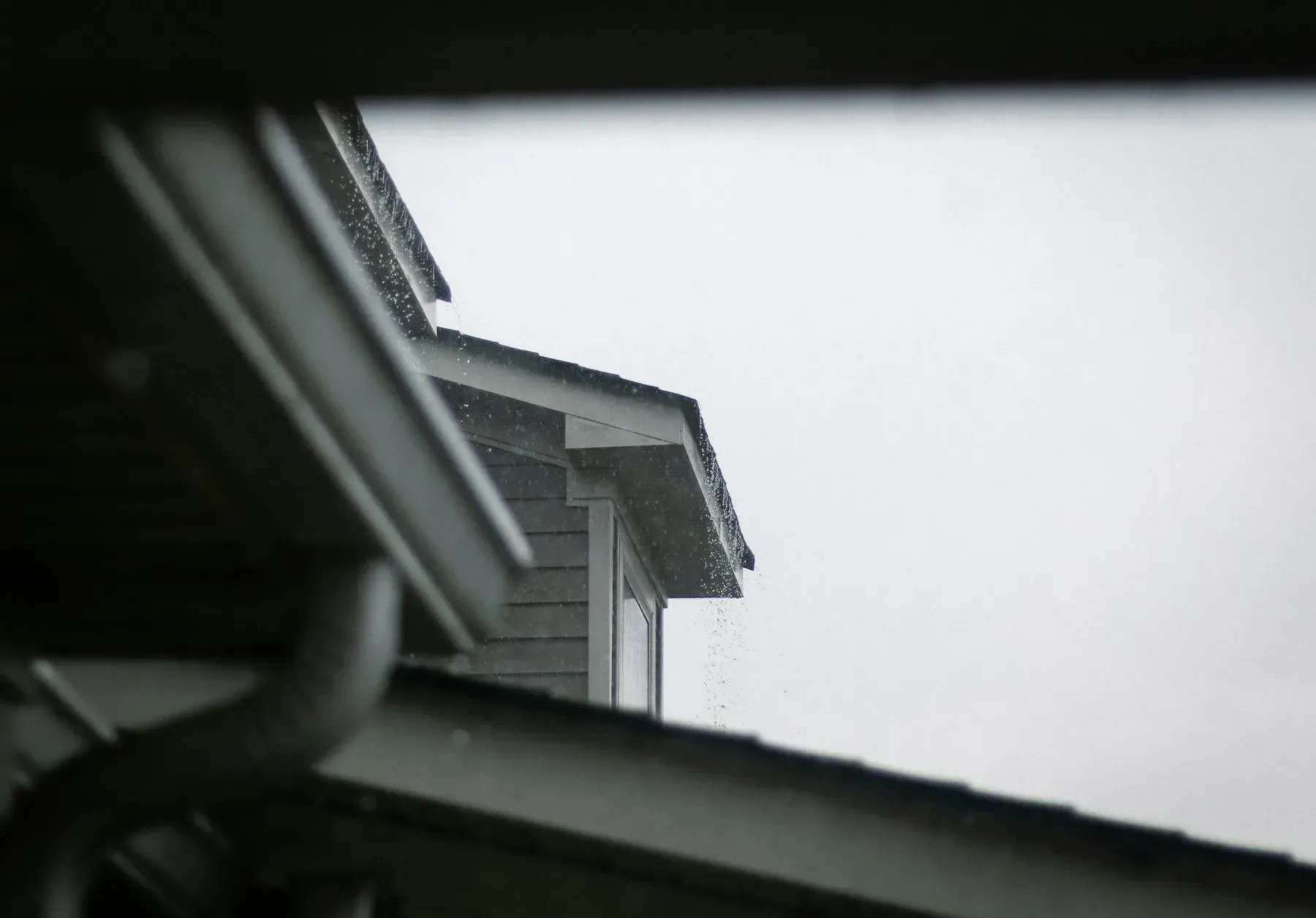
Rain falls through air carrying dust, road grit, wood smoke in the cold months and a heavy load of conifer pollen in the spring. Then it lands on your roof. It runs across shingles, picking up granule dust and whatever organic litter is sitting in the courses. It runs through the gutter, collecting oxidized aluminum chalk and the tea colored tannin that leaches out of soaked needle debris. Then it either overflows the gutter or blows off the roof edge and lands on the glass below as a thin brown film.
That is why the windows directly under a roof edge or a leaking gutter seam go first, why the film has a color to it instead of being grey dust, and why the same two windows on a house always look worse than the rest. It is not random. It is a drainage path, and you can usually trace it with your eyes.
The things around a window that put dirt back on it
Screens. This is the big one. A screen is a dust filter you never change. Every bit of pollen, needle dust and road grit that blows against the house collects in the mesh and in the frame channel, and it sits there dry until the first rain runs it off the screen and straight down the glass. Clean glass behind a dirty screen looks dirty again after one wet night. Getting the fill out of the mesh rather than just moving it around is what our screen cleaning upgrade is for, using a stand that holds the screen flat instead of a wipe down in place.
Tracks and sills. The bottom track on a slider holds a surprising amount of grit, and it sits at the top of the runoff path onto the pane below it. A clean pane above a loaded track is on a countdown.
Sprinklers. An irrigation head that clips a window is the most common cause of glass that will not come clean. Our water carries dissolved minerals, and every droplet that dries on glass leaves them behind. Over a season the deposits build, and over years they bond into the surface and stop being dirt at all. Move the head or change the arc. This is the one item on the list that gets permanently worse while you ignore it.
Overhanging branches. Anything dropping needles, sap or bird traffic above a window is a continuous supply, and no cleaning outruns it.
Some of it is not dirt
Before you blame a cleaning, work out what you are actually looking at.
Fog or haze between the panes. A double pane window is two sheets of glass with a sealed space between them. When the seal fails, moist air gets in and condenses inside. The haze or the visible droplets are on surfaces nobody can reach, and they tend to change with temperature and sunlight. No cleaning touches it.
A green or grey cast on the shaded side. Glass on a wall that never gets direct sun grows a fine biological film in a damp climate, for the same reason the shaded slope of a roof goes first. It comes off, but it comes back faster on that side than anywhere else on the house.
Hard water etching. Mineral deposits that have been on glass long enough leave a cloudy pattern that stays after the glass is dry and clean. That needs a different treatment than a wash, and in the worst cases the glass keeps a ghost of it.
Wear. Screens leave fine marks over time, and old glass holds patterns from years of wiping. In low winter sun, almost any window looks streaked from the right angle.
What actually makes a cleaning last longer
Do the screens at the same time as the glass. If you only change one thing on this list, change this one. It is the difference between two weeks and a season.
Clear the gutter above the worst windows. The film on those panes is arriving from above. An overflowing section or a leaking seam is a hose pointed at your glass every time it rains, and conifer needles pack a gutter where you cannot see them.
Check the sprinklers before the dry months. Watch the system run once, and move any head that touches glass or siding.
Do not clean in direct sun. The solution dries before the squeegee reaches the bottom of the pane, so it streaks. Overcast is ideal, which is not a shortage we have around here.
Time the outside of the house after the pollen drops. Conifer pollen in the spring is the heaviest single load of the year, and it sticks to damp glass. Washing before it lands means washing twice.
Inside, outside, and what per pane means
Half the time, the film people are looking at is on the inside. There is a quick test: touch a fingertip to each side of the glass at the same spot and see which side takes a mark. Interior film is usually cooking grease, candle soot and dust bonded together by humidity, and it is heaviest in kitchens and above heat sources. Exterior film is grit and runoff. They do not look the same up close and they do not come off the same way, which is why our window cleaning is offered inside and out or outside only.
One more thing worth understanding before you compare any numbers: prices are charged per pane, not per window. A typical window has two panes, a stationary one and a sliding one, so what most people call one window is usually two panes in the count. Knowing that up front makes the math make sense.
If the same few windows on your house always go dirty first, there is a reason above them. Book a visit and we will point at it. Our season by season rhythm covers when in the year glass is worth doing, and where it falls against the rest of the work.