
Most home maintenance advice is written for a climate with four distinct seasons and deciduous trees. Ours has roughly two: a long wet stretch and a short dry one, with conifers dropping debris through both. That changes the order of the work and when each job is worth doing.
Here is a rhythm that actually fits a house in Covington, Kent, Auburn or Puyallup, with what you can handle yourself and what is worth having done.
Late winter into early spring
The storms are over and the damage is finally visible.
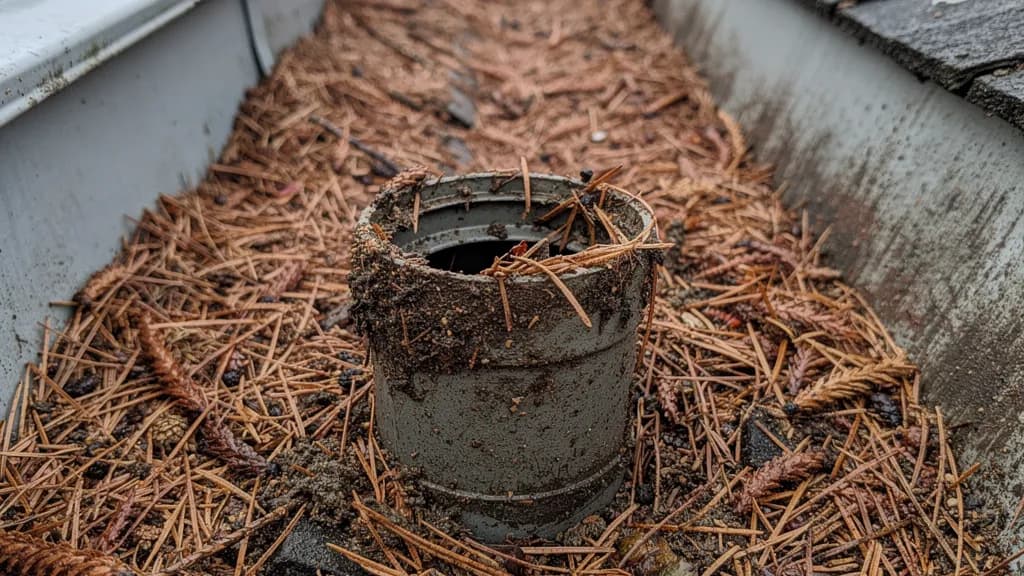
- Clear the gutters and check the downspouts. Winter fills a trough with everything the wind took out of the trees. Confirm that every downspout runs and that every one of them discharges away from the foundation rather than into a puddle against the house.
- Walk the perimeter after a real rain. Look for splash lines on the siding, trenches worn into the bark below the eaves and standing water in the corners.
- Look at the roof from the driveway. This is when moss is at its greenest and easiest to spot. Note the shaded slope and anything under a branch.
- Check the fascia and the gutter hangers. A run that sags has been holding wet needle sludge all winter, and that weight is how a hanger works its way out of the board.
Leave the glass for now. The pollen is about to arrive.
Spring
Everything is growing, including the things on the house.
- Wait out the pollen before doing windows. The conifer pollen load here is heavy and it sticks to damp glass. Cleaning before the drop is cleaning twice.
- Concrete first. Moss and algae on a driveway, a walkway or a patio are soft and full of water in the spring, which is when they come off with the least effort. A driveway and patio cleaning now is an easier job than the same slab in late summer once the growth has baked on.
- Trim back whatever touches the roof. Any branch over a slope is shade and debris at once. Spring is the practical time to get it done, before the dry season you want to use for everything else.
- Watch the sprinklers run. Any head that clips glass or siding will deposit minerals on it all summer, and on glass those deposits eventually stop being dirt and start being etching.
Summer
This is the working window, and it is short. Nearly everything that needs a dry roof, a dry wall or a dry day belongs here.
- Roof moss. Dormant moss brushes off cleanly and soaked moss smears, so this is the easiest stretch of the year to get a mat off and to put a treatment down before the fall rain switches everything back on. Moss does not die in the summer, it just stops, and our roof cleaning and moss removal includes the gutters and a pet and plant safe treatment. On a roof that is still clean, a treatment on its own is the simpler way to stay ahead of it.
- Soft wash the siding. Dirt, pollen film and the green cast on the shaded walls come off with a soft wash, which does the work with a cleaning solution at low pressure instead of force.
- Windows, inside and out. This is the one stretch of the year when clean glass stays clean for a while, so it is worth doing properly.
- Screens, with the glass. If they only come out once a year, this is the visit. A screen cleaning upgrade does more than a wipe down, and a loaded screen is the fastest way to make fresh glass look dirty again.
- Decks and patios. Wood has to dry before anything goes on it, so summer is the only sensible window for cleaning and then sealing.
Fall
The busiest stretch, and the only one with a real deadline. Everything here should be done before the rain settles in.
- Gutters, after the shed and before the rain. Fir and cedar drop heavily in late summer and fall, and needles pack the floor of a trough where you cannot see them. Getting them out before the first sustained rain is the highest value job on this whole list. Our gutter cleaning carries a 60 day warranty at no extra charge, which matters most right here, when a windy week can undo a clearing.
- Roof debris out of the valleys. Needle litter in a valley is a dam and a seedbed at the same time.
- Moss treatment down before the rain. Growth restarts with the water, so anything protective wants to be in place first.
- Holiday lights, while the weather still allows it. Installing on a clean, sound gutter line in mild weather is a completely different job from doing it in a cold, wet snap. It also pairs naturally with the fall gutter clearing, because the trough has to be clear and the hangers solid before anything hooks over the lip. Why the clips belong on the gutter line has the detail, and our holiday lighting stays on the roofline and the gutters.
- Test the outdoor outlets. Find out the exterior outlet is dead in the fall, not on install day.
Winter
Not much gets done, and that is fine. Winter is mostly for watching.
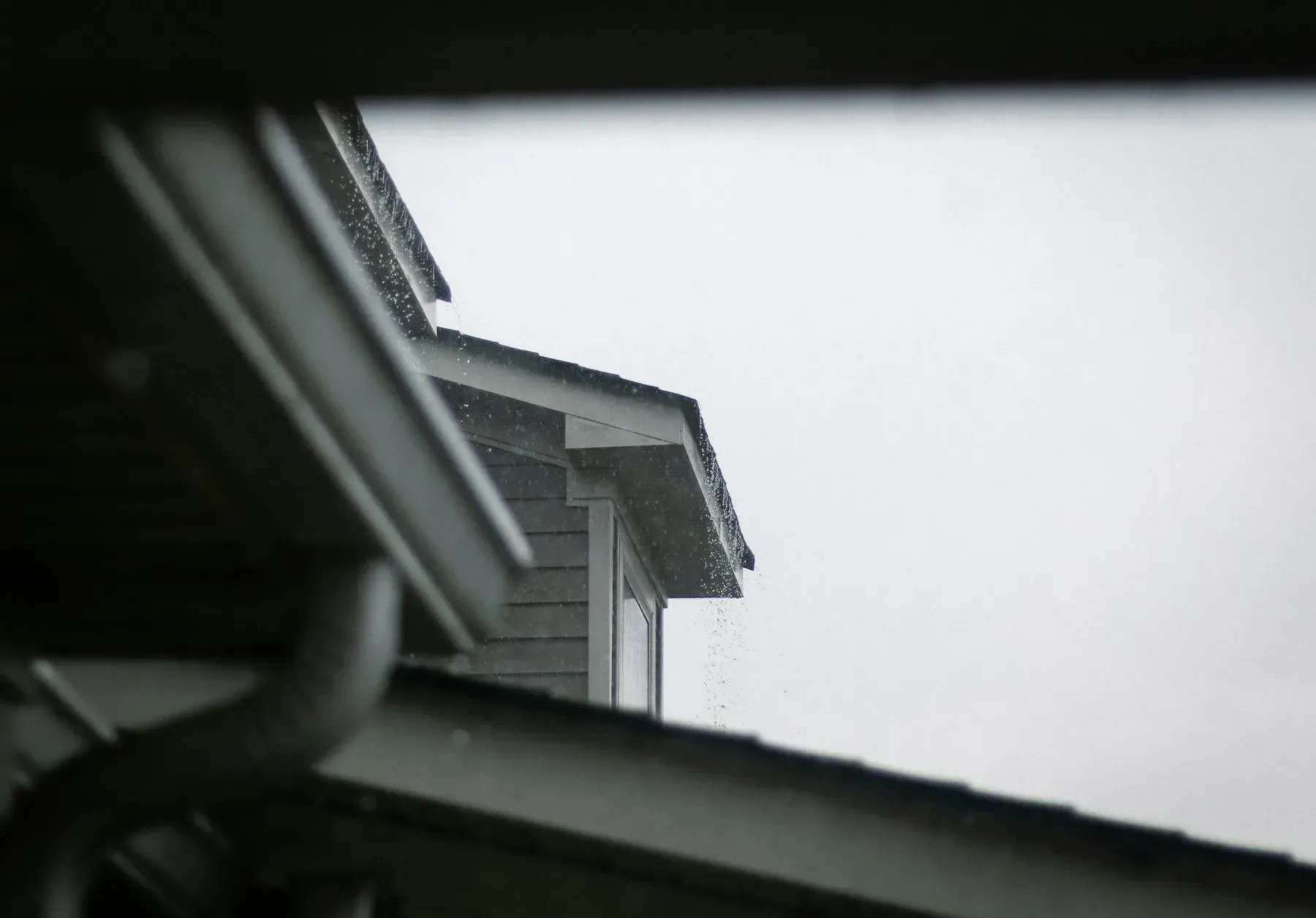
- Go outside once during a heavy rain. Five minutes in the weather tells you more about your gutters than an hour on a ladder in July. Listen for a waterfall at a corner or a downspout that stays silent while its neighbor drums.
- Watch the eaves in a cold snap. Our winters are mild, but a freeze on a roof with a blocked gutter is where ice damming starts, and the water has to go somewhere.
- Keep the moss on your radar. A mild winter is a growing season here. The mat that looked dead in August is working again, which is exactly why summer is the time to deal with it.
- Stay off the ladder. Wet moss on a roof is as slick as ice, a soaked gutter flexes under a ladder hook, and nothing on the outside of a house in December is worth a fall.
Why a set rotation beats remembering
None of this is complicated. It is just easy to lose track of, and the jobs that slip are the ones with deadlines attached to the weather.
The simplest way to handle it is a yearly rotation: the same work, at roughly the same point in the year, without anybody having to remember to call. It keeps the jobs in the order the weather allows, it makes the cost predictable, and at Royal Windows and Gutters customers who get on a rotation get a three year price lock. Active and retired military households get 10% off.
If you want help working out what your house actually needs and in what order, book a visit. We are residential only and we work across South King, Pierce and Thurston County, so this rhythm comes from the houses and the trees we see every week.